


Who could have missed the news over the weekend? Michał Oksiński, a 24-year-old factory worker from Ostrowiec Świętokrzyski, Poland, killed his parents and sister before travelling to Kraków. He then drove his father’s black Subaru 130 miles to the old town area and began randomly shooting from the vehicle. He would kill six more and wound fifteen.
Oksiński had passed a psychological evaluation less than a year prior and was a legal gun owner. He was described as a quiet guy who worked as a lathe operator in a refractory materials plant. Neighbours said he had a passion for shooting, and police said he was not known to them. He had no criminal or military record.
Two AR-15 rifles and two handguns, as well as hundreds of rounds of ammunition, were found in the vehicle. Authorities collected at least four phones from the scene and additional electronic equipment from his home.
A truly worrying event. To add to the confusion, the Polish Prime Minister immediately released statements about the attacker’s political motive. Without evidence or definitive findings, the quotes were published throughout the world. Why did it matter?
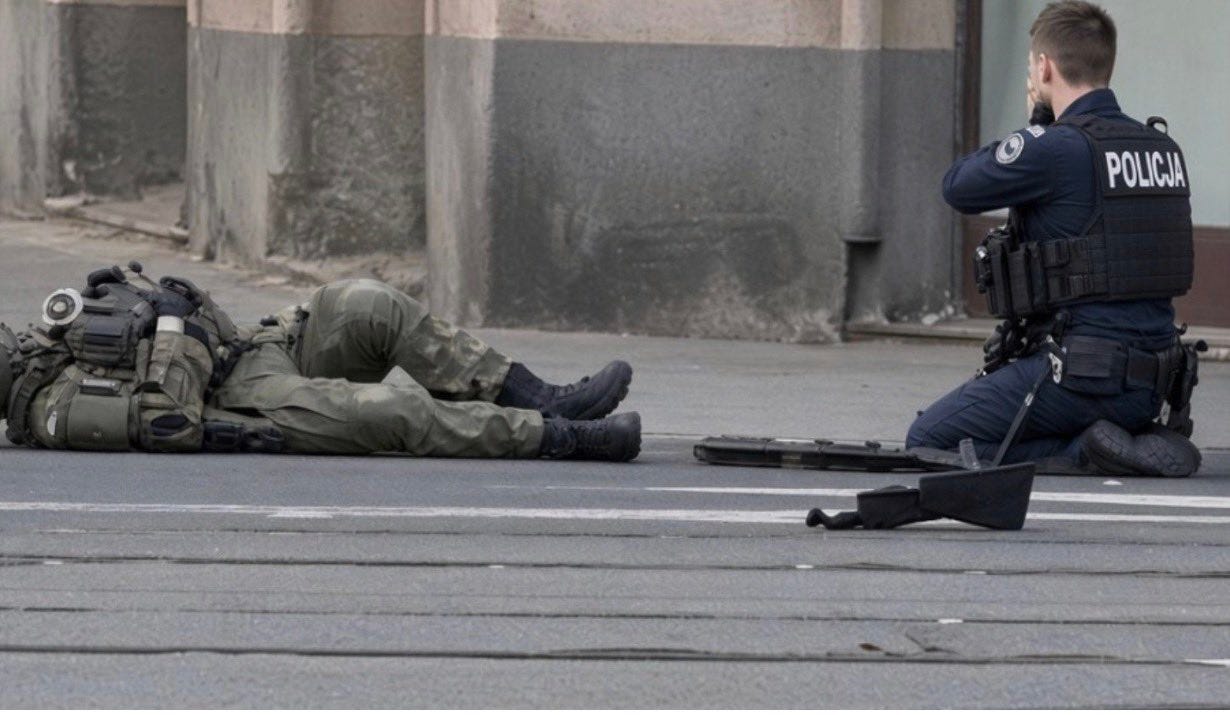
In my opinion, it doesn’t matter, but I understand why he felt pressed to address it. I feel that it is damaging to both the victims and the future understanding of motive, if high-ranking officials make political decisions in the heat of such tragedy.
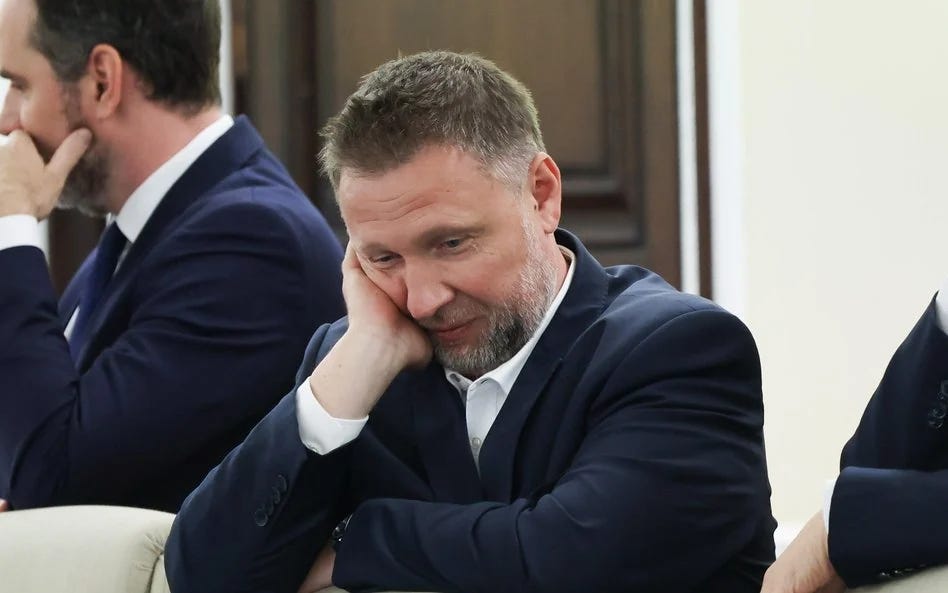
On November 7th, the same day as the attack, the Interior Minister Marcin Kierwiński and Justice Minister Waldemar Żurek publicly linked the attacker to far-right ideology. Donald Tusk, the Prime Minister, followed suit. They would later describe it as a hypothesis rather than a conclusion.
"Evidence is being collected, but I will not show or disclose it. I ask for restraint," Zurek told Radio Zet.
But two days later, on November 9th, prosecutors said they could not attribute the attack to any particular ideology. This raises questions about the evidential basis for making the statement. From what they said, this was not a targeted political attack, and all the victims, other than the perpetrator’s family, were selected at random.
But the following day, the Justice Minister spoke to Radio Kraków, saying investigators had found what he described as a “very strong” far-right extremist line of inquiry. He cited additional material to support the initial findings. This included internet searches about the Norwegian mass killer and Nazi Anders Breivik, a Gadsden flag in the killer’s bedroom and a curious acronym found on his work locker. He said this evidence supported further investigation into the ideological motive but also said it did not establish any motive conclusively.
Political opponents say that the Polish government has been ‘cherry-picking politically convenient information while ignoring other, less supportive facts’. The killer wore camouflage and military gear when carrying out the murders, which is like bank robbers and many other murderers who did not have political motives.
The Gadsden flag is a relevant piece of evidence showing the killer’s alignment with a belief. The Gadsden Flag is a well-known part of American culture dating back to 1775. It is the bright yellow banner with the motto ‘DON’T TREAD ON ME’ underneath a rattlesnake. The snake has 13 rattles symbolising the original colonies of America. This flag is often used by libertarian organisations, but also to gun advocates. It’s seen as a rebellious banner more than anything else. An interesting find.
According to a Polish newspaper, citing Kraków police findings, Oksiński’s internet activity prior to the event extended far beyond just Breivik. The newspaper said he had spent weeks searching for information about Charles Manson and Ted Kaczynski, as well as other mass killers. It also reported co-workers’ accounts of his interest in serial killers. None of these famous killers were definitively linked with political motives, although this can be debated.
These reports would contradict the Polish government’s initial statements but still do not mean much. After all, I have extensively researched those cases and many more in my time.
Officials say Breivik’s crimes provide a point of comparison. On 22 July 2011, Breivik killed 77 people during two attacks in Norway: eight in a bombing in Oslo and 69 in the shooting on Utøya island. He also published a political manifesto setting out his extremist beliefs.
The horrible events are similar, but no comparable manifesto had been found written by Oksiński’s. Which is unlike in Breivik - or at least none had been reported by authorities. Also, Oksiński died before giving a statement.
‘GGER’ were the curious letters found on Oksiński’s work locker. According to investigators from Poland’s Internal Security Agency, this inscription could mean ‘Good Game Elliot Rodger’. It’s a reference to the perpetrator of the 2014 mass killing in Isla Vista, California (just outside Santa Barbara). I am not so sure. This could mean anything. But if it does refer to Rodger, then it is clear evidence that he was not totally motivated by ‘far-right’ politics, despite many wanting to link everything to an upcoming election.
Elliot Rodger was a misogynist who was born and raised in Britain and who killed 6 people and injured 14 by stabbing his roommates and shooting at people outside a sorority house and a deli at several locations. His mother, Li Chin, found his 141-page manifesto and attempted to stop him from acting but was too late. Rodger, weirdly, became an online hero within the INCEL world.
Again, these horrible events are similar, but no comparable manifesto had yet been found in Oksiński’s case, unlike in Rodger’s. It should also be noted that Rodger did not have a political ideology. Would Oksiński have written anything in english?
Investigators have drawn a comparison between the sequences of these two attacks. As with many mass shootings, there are similarities. The killer began with people close to him before moving on to complete strangers in public places. This similarity does not establish a shared motive.
Eryk Stasielak, head of the Kraków branch of the National Prosecutor’s Office, expressed the uncertainty directly: “There are elements indicating that the perpetrator was fascinated by extreme ideologies, but we need more time to draw conclusions regarding his motivations.” He said evidence was still being gathered.
The distinction between a possible explanation and an established finding seemed to become important as this case attracted international attention. Reuters and the BBC are just two of the outlets that reported Żurek’s original comments without clarity about the full findings. The political opposition MP, Michał Wójcik, accused the government of misleading the international community. This is an accusation and part of his official political response. He felt he had to make one.
Alongside the murder investigation, authorities were also inundated with reports of misleading online material relating to the attack. Poland’s Ministry of Digital Affairs reported more than 2,000 accounts to social media platforms for ‘alleged disinformation’. The Central Bureau for Combating Cybercrime reportedly arrested nine people over posts involving threats, hate speech or praise for the killings. I can only wonder if the comments from the Prime Minister fuelled this fire.
Poland's Central Bureau for Combating Cybercrime said it detained five Polish and one Ukrainian citizen who were posting threatening content online after the attack. All forces are on high alert for copycat shooters.
So far, with the available reports and noise from the left and right, it is hard to know whether the act reflected an ideology. To me, Oksiński’s interest in notorious mass killers and his wish to imitate their crimes are undeniable. His bedroom flag, internet searches and the graffiti at work are possible evidence of a killer in the making, rather than grounds for any conclusion.
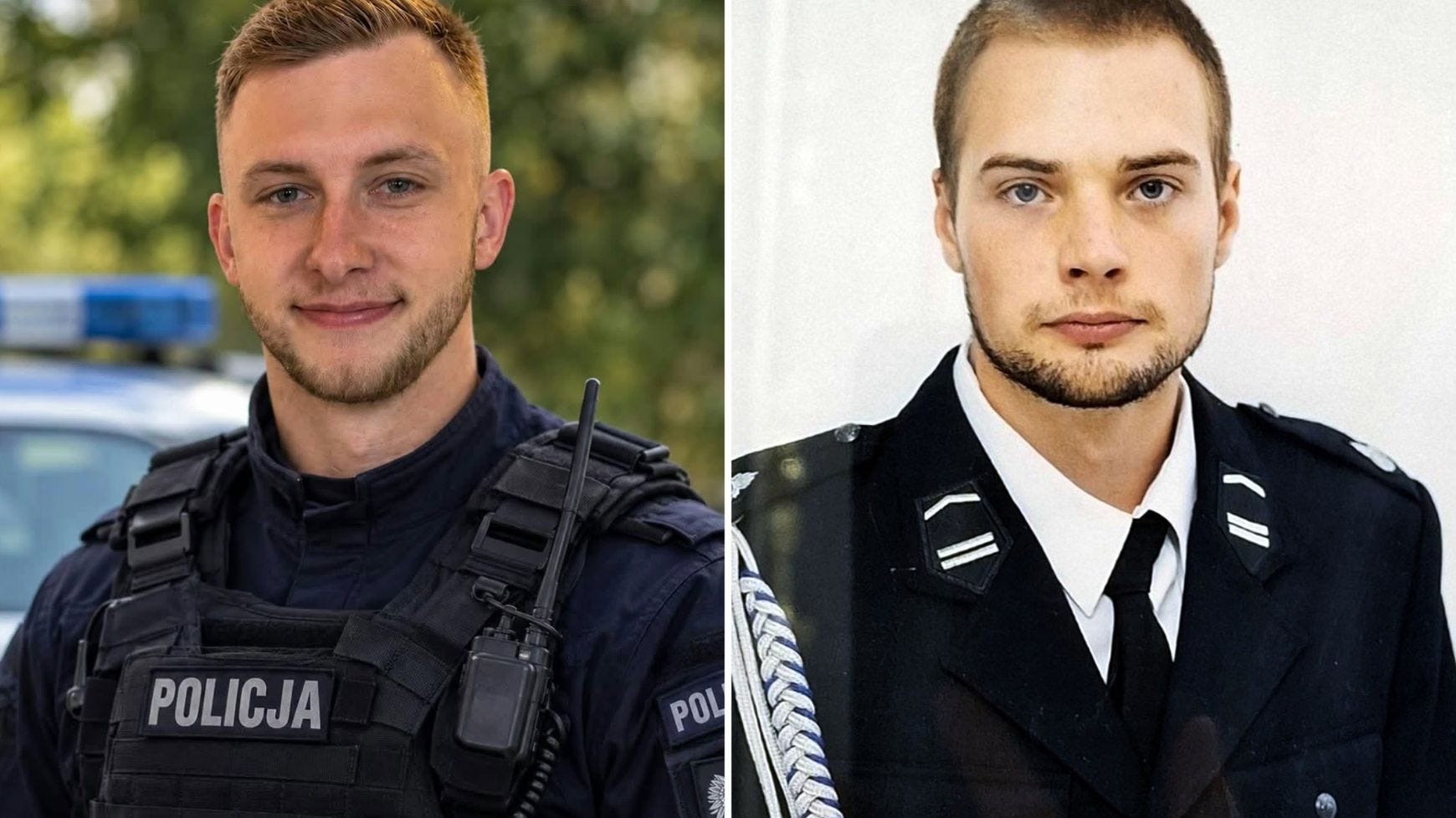
Police shot Oksiński at the scene, and he died in hospital two days after the attack. His death means investigators will not be able to question him further about his intentions, even if he could explain why.
For the victims’ families and those injured, the suffering is not temporary like a political campaign. Six people were killed in the city centre, three members of the killer’s family have lost their lives, and others have required extensive hospital treatment. The investigation continues without a definitive account of the attacker’s motive, despite what the politicians say.
Of the people killed in the city centre, four were Polish nationals, one was British and one was Austrian. Sixteen people were taken to hospital, including two police officers and the killer himself. In total, they included five foreign nationals, from Austria, Britain, Germany, Portugal and Russia.
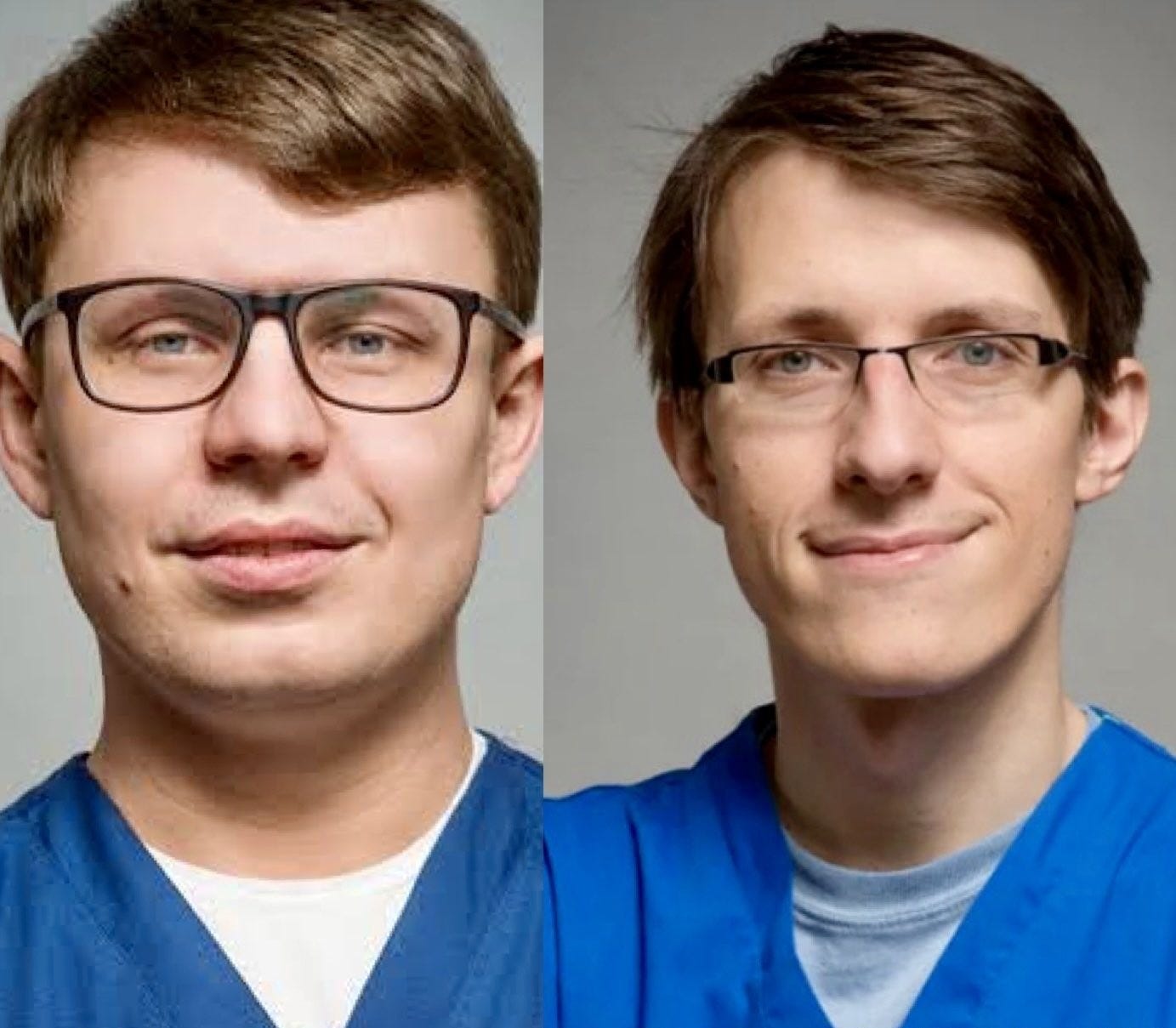
Two surgeons, Michał Pędziwiatr and Mateusz Wierdak, who had been eating near the Main Market Square ran to the scene. They treated the attacker and the two injured police officers. One of the surgeons said his colleague had ‘undoubtedly’ saved the life of a horribly injured police officer.
The two officers, Jakub Kulik and Artur Morański, have been awarded the Officer’s Cross of the Order of Polonia Restituta. President Karol Nawrocki visited the different hospitals to present the decorations to each hero. They risked their lives to save others.